Examining the Importance of Metal Foundries in Industrial Manufacturing
Metal foundries play a vital role in the realm of manufacturing. They transform raw materials into essential parts that benefit diverse industries, from aerospace to automotive. Modern casting methods allow for the development of robust components that considerably boost operational performance and safety. Nevertheless, as they integrate innovative technologies and encounter sustainability concerns, the direction of these facilities is uncertain. The future of this essential industry is worth contemplating.
An Overview of the Metal Casting Process
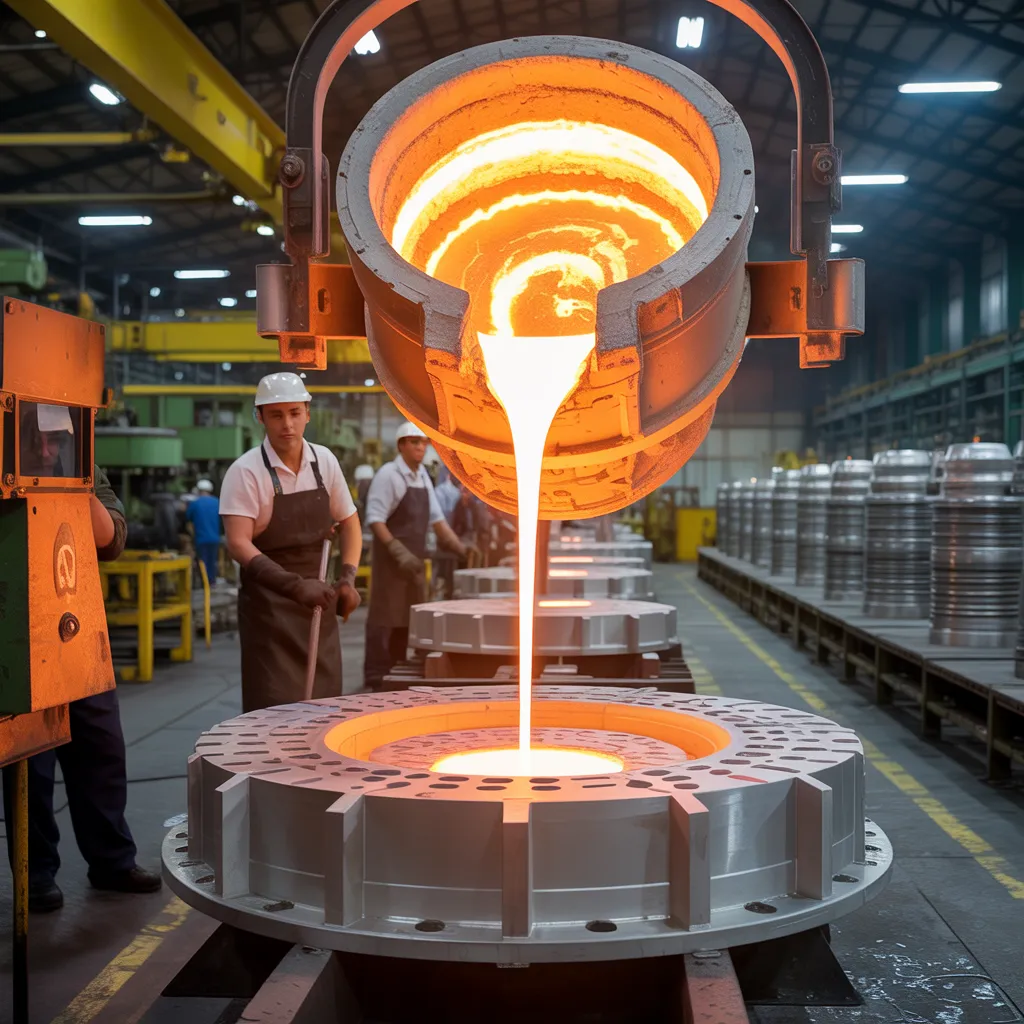
The metal casting procedure converts molten metal into solid forms using a variety of methods. The procedure starts with the melting of metal, most commonly inside a furnace, where it reaches a temperature suitable for casting. Once molten, the metal is poured into a mold, that establishes the shape of the end product. Numerous techniques including sand casting, investment casting, and die casting are employed, each offering unique advantages regarding precision and complexity.
Heat dissipation takes place as the molten metal solidifies within the mold, enabling it to assume the required configuration. Once the metal has solidified, the mold is removed, and the casting is often subjected to finishing processes like surface treatment or machining to refine its qualities. Understanding these fundamental steps is vital for improving operational effectiveness and maintaining the integrity of the completed parts, establishing the metal casting method an integral part of present-day manufacturing operations.
The Evolution of Metal Casting Facilities
As civilizations evolved, the evolution of metal foundries was essential to industrial development. In the beginning, ancient societies utilized rudimentary smelting processes to obtain metals from natural ores, with records of copper and bronze casting traced back to 4000 BCE. The emergence of iron casting around 1200 BCE represented a major turning point, enabling the creation of more durable tools and weapons.
In the Middle Ages metalworking foundries developed considerably with the introduction of improved furnaces and molding techniques, facilitating increased production efficiency. The era of the Renaissance saw the integration of systematic scientific methods into the craft of metalworking, enhancing both quality and precision.
The Industrial Revolution catalyzed the proliferation of metal foundries, as steam power and mechanization transformed industrial production capacity. During the late 1800s, foundries became essential to numerous industries, supplying essential parts for infrastructure, machinery, and transportation. This historical development emphasizes the critical importance of metal foundries in shaping modern industrial landscapes.
Metal Casting Applications in Industry
Metal casting serves a vital function in a wide range of industries, notably affecting manufacturing processes. In the automobile industry, it is vital for producing elements that boost vehicle performance and safety. Likewise, its applications in aerospace and construction equipment manufacturing demonstrate the flexibility and relevance of metal casting in modern production.
Automobile Parts Production
Within the automotive parts industry, metal casting serves a vital function in creating essential parts that require both strength and precision. This method facilitates the production of elaborate designs, which are indispensable in components like suspension parts, engine blocks, and transmission casings. By employing metals including aluminum and iron, manufacturers are able to develop sturdy yet lightweight parts that boost overall vehicle performance and fuel efficiency. Modern casting methods, such as sand casting and die casting, support high-output production without compromising dimensional accuracy. Additionally, the capacity to reuse metal scrap in foundries promotes environmental initiatives across the automotive sector. As automobiles advance with emerging technologies, the requirement for cutting-edge casting solutions steadily increases, highlighting the critical role of metal foundries in automotive component production.
Aerospace Industry Applications
The aerospace industry depends significantly on metal casting to manufacture critical components that necessitate exceptional strength and lightweight properties. Parts including turbine blades, structural frames, and engine parts are frequently manufactured through advanced casting techniques. These processes facilitate complex configurations that improve aerodynamics and performance while minimizing weight. Substances including aluminum, titanium, and superalloys are frequently selected because of their favorable strength-to-weight ratios and resistance to extreme temperatures. Furthermore, exact casting procedures provide tight tolerances, which play a vital role in safety and efficiency in aerospace applications. As the industry advances, developments in casting processes steadily elevate component performance, leading to superior fuel economy and aircraft reliability. This underscores the critical importance of metal foundries in advancing aerospace development.
Heavy Equipment Parts
A wide variety of components in heavy machinery are created through metal casting, showcasing its fundamental role in the field. Essential components such as engine blocks, transmission casings, and chassis components benefit from the exactness and resilience that the casting process provides. The technique allows for intricate shapes, which are necessary for the effective functioning of large-scale equipment. Furthermore, casting alloys such as durable iron and steel compounds offer the essential resilience to withstand harsh working conditions. The potential to generate high volumes of components with reliable precision also strengthens the trustworthiness of construction equipment. As the demand for reliable and high-performing equipment rises, the metal foundry sector remains integral to developing construction industry advancements, guaranteeing that machinery satisfies sector benchmarks and functional demands.
Advanced Technologies Reshaping Foundry Production
As the demand for efficiency and precision in manufacturing grows, cutting-edge technologies are revolutionizing foundry production. Advanced automation, particularly through robotics, is enhancing the speed and accuracy of metal casting processes. These automated robotic systems carry out repetitive operations with near-zero error rates, cutting labor costs and boosting output reliability.
Moreover, the adoption of 3D printing is transforming mold fabrication, allowing for rapid prototyping and advanced geometries that conventional techniques are unable to produce. This innovation not only minimizes lead times but also limits material wastage.
Data analytics and the Internet of Things (IoT) are further optimizing operations by enabling real-time monitoring of equipment and processes. These technologies facilitate predictive maintenance, reducing downtime and enhancing overall productivity.
Combined, these breakthroughs are redefining the foundry get started production landscape, propelling manufacturers toward greater efficiency and precision in an increasingly competitive industrial environment.
Why Sustainability Matters in Metal Foundries
While metal foundries have traditionally focused on production efficiency and cost-effectiveness, the increasing emphasis on sustainability is reshaping industry priorities. As international recognition of environmental challenges increases, foundries are acknowledging the importance of reducing their environmental impact. This transformation is fueled by regulatory requirements, consumer expectations for eco-friendly products, and the lasting economic advantages of sustainable operations.
Integrating eco-friendly technologies and material reuse not only conserves resources but also reduces operational costs. Additionally, embracing sustainable practices strengthens the standing of metal foundries, drawing in partners and clients who value environmental responsibility.
Environmental responsibility in metal foundries also drives innovation; companies are exploring alternative materials and methods that lessen environmental impact. Ultimately, embracing sustainability is becoming essential for foundries to remain competitive in a market that increasingly values environmental stewardship alongside traditional performance metrics.
What Difficulties Are Metal Foundries Up Against Today?
Metal foundries are currently grappling with numerous critical obstacles that influence their overall performance. Rising energy costs and an ongoing scarcity of qualified workers create complications in production workflows, while stringent environmental regulations place further regulatory demands on operations. Resolving these concerns is vital to sustaining the industry's growth and competitive advantage.
Growing Energy Expenses
Surging energy costs create a substantial challenge for metal foundries, impacting their operational efficiency and profitability. As energy prices fluctuate, foundries encounter higher costs tied to melting, casting, and finishing operations. These increasing costs may contribute to reduced profit margins, forcing some foundries to reconsider their pricing strategies or operational practices. Additionally, the requirement for energy-consuming equipment and technology intensifies the financial pressure. Foundries may find it necessary to pursue energy-efficient technologies to offset these expenditures; yet such investments demand considerable upfront capital. Beyond this, the competitive arena becomes more challenging as foundries work to sustain their market presence while managing these economic difficulties. As a result, controlling energy expenditures continues to be a vital concern for the long-term viability of metal foundries.
Skilled Workforce Shortage
With the growing demand for intricate metal components, foundries are struggling with a serious skilled labor deficit that undermines their production capacities. Many experienced workers are retiring, and there are insufficient new entrants to fill these roles. This deficit leads to higher labor expenses and production timeline disruptions. Foundries frequently struggle to draw in younger professionals, as the sector is viewed as less attractive than technology-driven industries. Additionally, the specialized skills required for metal casting and machining take time to develop, compounding the problem. Therefore, foundries could face obstacles in fulfilling market needs, impacting their competitiveness and profitability. Tackling this shortage is vital for preserving development in the metal casting industry.
Environmental Regulations Compliance
Compliance with environmental regulations poses significant challenges for foundries in today's industrial landscape. These facilities are increasingly pressured to minimize emissions and waste while adopting cleaner technologies. The multifaceted nature of regulations, varying by region and subject to frequent changes, introduces uncertainty and necessitates continuous adaptation. Economic limitations further hinder compliance efforts, since investments in updated equipment or processes can be considerable. Additionally, foundries face the challenge of ensuring that their workforce is adequately trained in environmental standards. Non-adherence can bring about significant penalties and reputational damage, highlighting the necessity for consistent monitoring and management frameworks. Maintaining a balance between operational productivity and regulatory conformity remains an essential challenge for the long-term sustainability of metal foundries.
Future Innovations in Metal Foundry Technologies
The evolution of metal foundry technologies holds extraordinary potential that could transform industrial manufacturing. Innovations such as additive manufacturing are gaining traction, allowing for the creation of complex geometries and reducing material waste. Additionally, the integration of artificial intelligence and machine learning enhances process optimization, enabling real-time monitoring and predictive maintenance.
Sustainability is also a focal point; innovative recycling processes and environmentally conscious materials are being engineered to lessen ecological impact. Incorporating 3D printing technology in foundries has the potential to simplify prototyping and shorten lead times, enhancing production flexibility.
Furthermore, breakthroughs in robotics and automation are designed to improve safety and overall efficiency within foundry environments. Such technologies not only are set to enhance productivity but also to develop safer working conditions. As these technologies evolve, they will most likely bring about a highly sustainable, efficient, and adaptive metal foundry sector, fundamentally transforming manufacturing on a worldwide scale.
Common Questions and Answers
What Metal Types Are Frequently Utilized in Foundries?
Widely utilized metals in foundries encompass iron, aluminum, copper, and brass. Every metal fulfills particular purposes, with iron proving ideal for strength, aluminum for lightweight structures, and copper for its conductive properties and resistance to corrosion.
What Methods Do Foundries Use to Ensure Quality Control in Production?
Foundries guarantee quality control in production through thorough examination of raw materials, continuous monitoring during the melting and casting processes, and maintaining firm conformance to industry standards, producing high-quality metal products that meet specifications.
What Safety Protocols Are Used in Metal Foundries?
Metal casting facilities utilize numerous safety measures, including safety equipment for personnel, ventilation solutions to limit fume inhalation, regular equipment maintenance, workplace safety training initiatives, and emergency preparedness procedures to mitigate risks associated with molten metal handling.
How Do Foundries Handle Waste and Byproducts?
Foundries oversee waste and byproducts by means of recycling, responsible disposal, and treatment processes. They adopt approaches to reduce the impact on the environment, maintaining regulatory compliance while promoting sustainability throughout their facilities and neighboring communities.
What Career Paths Are Available in the Metal Foundry Industry?
Job prospects in the metal foundry industry include roles such as quality control inspectors, engineers, metalworkers, and foundry managers. Furthermore, positions in research and development, maintenance, and environmental management are available as well, ensuring diverse prospects.